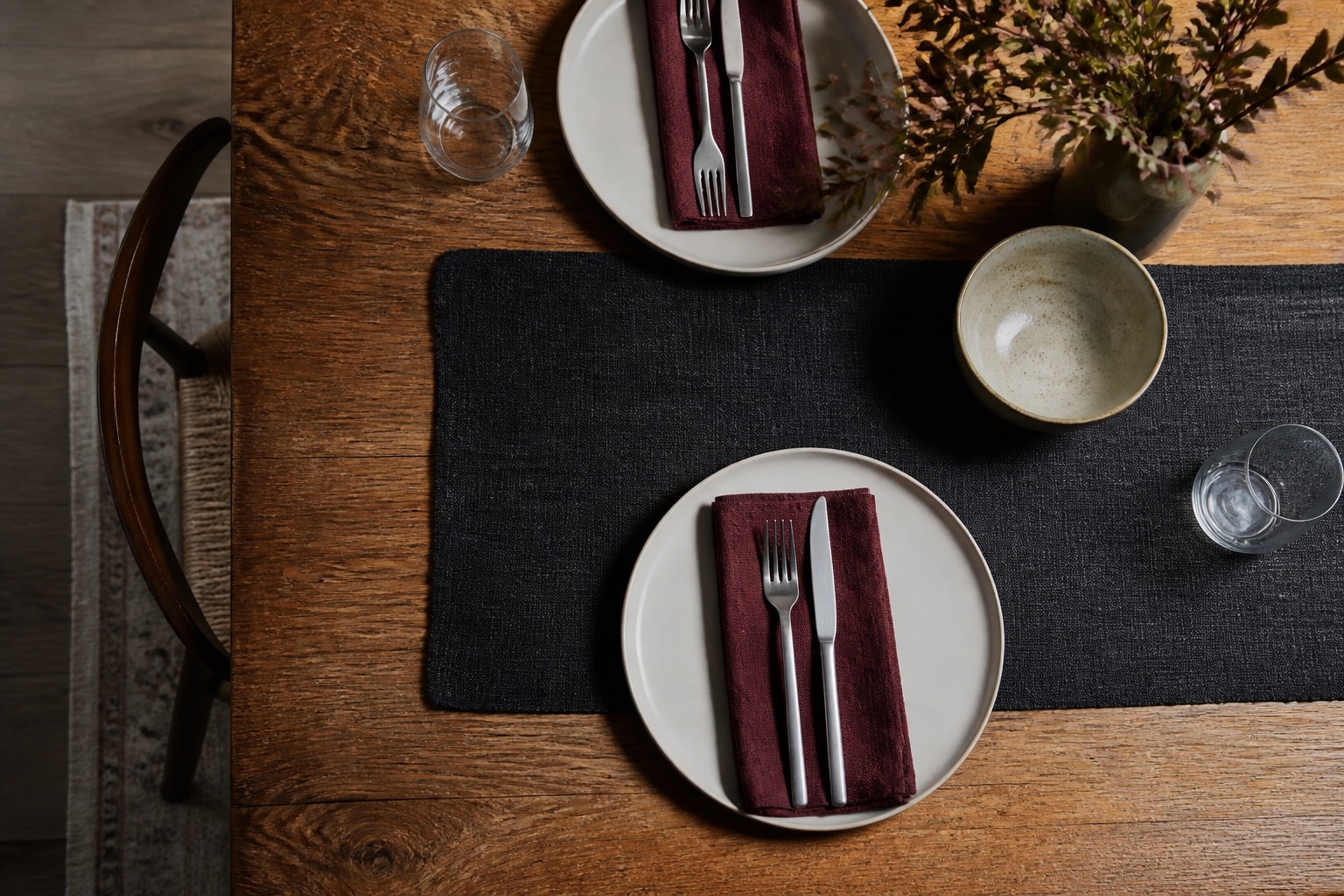
Begin With the Life of the Table
A useful table setting begins with ordinary habits, not formal rules. Consider how many people usually share a meal, how food is served, what must fit comfortably within reach, and which pieces can be cleaned without turning dinner into a maintenance project. A coherent table does not require every item to match. Repetition of one or two elements—perhaps a shape, a color, or a finish—can hold varied objects together.
Table linens soften sound, protect surfaces, and add color or texture. Placemats define individual spaces; a runner organizes the center; a full cloth changes the character of the entire table. The best choice depends on use. A loosely textured fabric may create warmth, while a smooth, tightly woven cloth can make a setting feel quieter and more formal.
Flatware, Glass, and Tableware
Flatware should be judged in the hand. Balance near the center makes a piece feel controlled, while the profile of an edge or handle affects comfort. For glassware, stability and rim shape often matter more than ornament. Tableware benefits from stackability, a durable edge, and proportions that suit the food normally served. These are small observations, but repeated daily use makes them consequential.
For general household product-safety information, the federal home safety guide provides current guidance across common domestic categories. It should be consulted for safety questions rather than relying on assumptions based on an object’s age or appearance.
Building a Flexible Place Setting
A flexible setting can be built in layers:
- Choose a durable everyday foundation. Plates and bowls should fit storage, washing, and the foods most often prepared.
- Add one adaptable textile layer. Neutral napkins or a runner can connect varied pieces without making the table feel fixed.
- Keep serving pieces proportional. A few well-sized platters and bowls usually work harder than many specialized forms.
- Leave room for change. Flowers, seasonal material, or a piece of craft can alter the mood without replacing the foundation.
Caring for Household Linens
Care starts with the material and construction. Fiber content, dye stability, weave, and decorative stitching all affect what a textile can tolerate. Promptly blotting a spill is generally safer than rubbing it deeper into the fibers. Before laundering, inspect for loose threads, weak seams, or embellishment that could catch. Store clean textiles dry, away from persistent light, and avoid compressing fragile folds for long periods.
The National Park Service’s Museum Handbook appendix on curatorial care of textile objects explains careful handling and storage principles for valued fabric objects. Museum-level methods may be more cautious than an everyday tea towel needs, but the underlying lessons—clean hands, stable storage, low light, and support for fragile material—remain helpful.
Judge Quality at the Quiet Details
Quality often appears in quiet details. On a plate, check whether the foot sits evenly and the rim feels consistent. On glassware, look for a stable base, a comfortable lip, and a form that can be cleaned without trapping residue. With flatware, inspect the transition from handle to working end; an abrupt ridge can become noticeable through repeated use even when the overall silhouette is graceful.
Mixing Old and New Without Guesswork
When combining inherited pieces with newer ones, measure first. Diameter, height, storage clearance, and dishwasher fit are more dependable than visual estimation. Check older objects for cracks, unstable surfaces, sharp edges, or uncertain materials before using them with food. An object can remain meaningful as display even when active use is not appropriate.
These habits reflect the kind of cross-category thinking a documented tabletop-and-linen assortment could invite. Readers interested in how material and handwork shape an object can continue to gallery and craft. For using objects as gifts without overemphasizing price or novelty, see the thoughtful gifting guide.