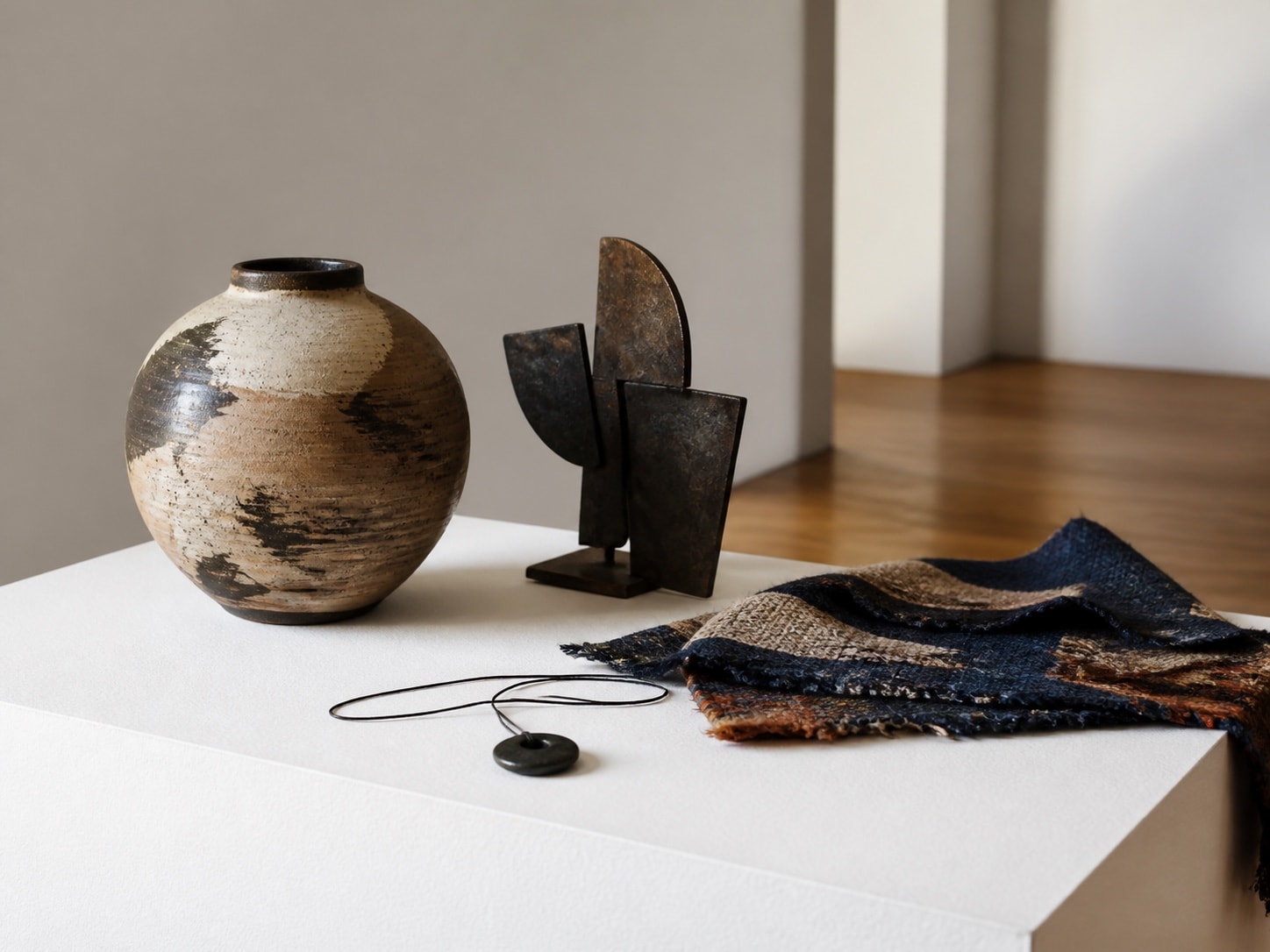
Why a Gallery Changes a Shop
A gallery asks visitors to pause. Retail displays can do the same, but the presence of art makes close attention an explicit part of the environment. Shape, surface, scale, and material become subjects in themselves. When a gallery is physically connected to a shop, that attentive way of looking can carry over to a bowl, a woven cloth, a piece of jewelry, or a household tool.
The documented interior supported that exchange. High ceilings gave wall works room to breathe, restored hardwood added texture underfoot, and the connected plan allowed movement between gallery and showroom. The essay on historic interiors examines that setting as part of the shop’s identity.
Understanding American Craft
American craft is a broad field rather than a single look. It includes work in clay, glass, fiber, wood, metal, and mixed materials, ranging from functional vessels to objects intended primarily for contemplation. The strongest way to approach a craft object is to begin with evidence visible in the object: the material chosen, the marks of a process, the balance between utility and expression, and the way the surface responds to light.
The public art-conservation overview offers general insight into why materials and making processes matter to the long-term care of artworks. It is a useful authority for readers studying craft, though it does not document this shop or any exhibition held there.
Questions for Looking Closely
A thoughtful encounter with craft does not require specialist vocabulary. A short sequence of questions is enough to slow the eye:
- What material leads? Notice whether the maker emphasizes weight, translucence, softness, grain, or reflectivity.
- What does the hand leave behind? Tool marks, irregular edges, joins, and variations may reveal how the object was formed.
- Does use change the work? A vessel or textile can acquire meaning through handling, wear, and placement in daily life.
- How does space affect it? A small object may demand intimacy, while a larger work organizes the room around it.
Jewelry as Small-Scale Craft
Historical sources include craft jewelry in the assortment. Jewelry compresses many craft questions into a small form: material must work with the body, fasten securely, withstand repeated handling, and still establish a visual rhythm. Looking at construction is often more revealing than simply classifying style. Edges, closures, articulation, balance, and finish show how an object was meant to move and endure.
No maker is named or implied to have exhibited or sold work through the shop without source-level proof. That restraint matters because exhibition and sales histories affect the records of real people and institutions. The documented gallery component was important to the shop’s identity.
Construction as Visible Evidence
Craft quality is better judged by the relationship between material, process, and intended use than by perfect regularity. A ceramic vessel can retain throwing lines while still meeting the table evenly. A wooden box may show grain variation, yet its lid should move in a way suited to seasonal expansion. In metalwork, joins, edges, and thickness reveal how the structure was resolved. In fiber, tension and finishing show how a surface will hang, fold, or bear weight.
Living With Objects
The gallery-and-shop model blurred an old boundary between art and use. A handcrafted bowl might be displayed formally, then become part of an everyday table. A textile could be appreciated for structure and color while also serving a domestic purpose. That double life helps explain why craft belonged naturally beside tabletop and linen traditions and why such objects often became thoughtful gifts.
The Paula Brown Shop is remembered here as a place where looking itself was part of the experience. Its gallery component made return visits meaningful and gave the eclectic assortment a visual center. The exact exhibition history remains unknown; the documented relationship between art, craft, space and daily life defines the gallery’s role.