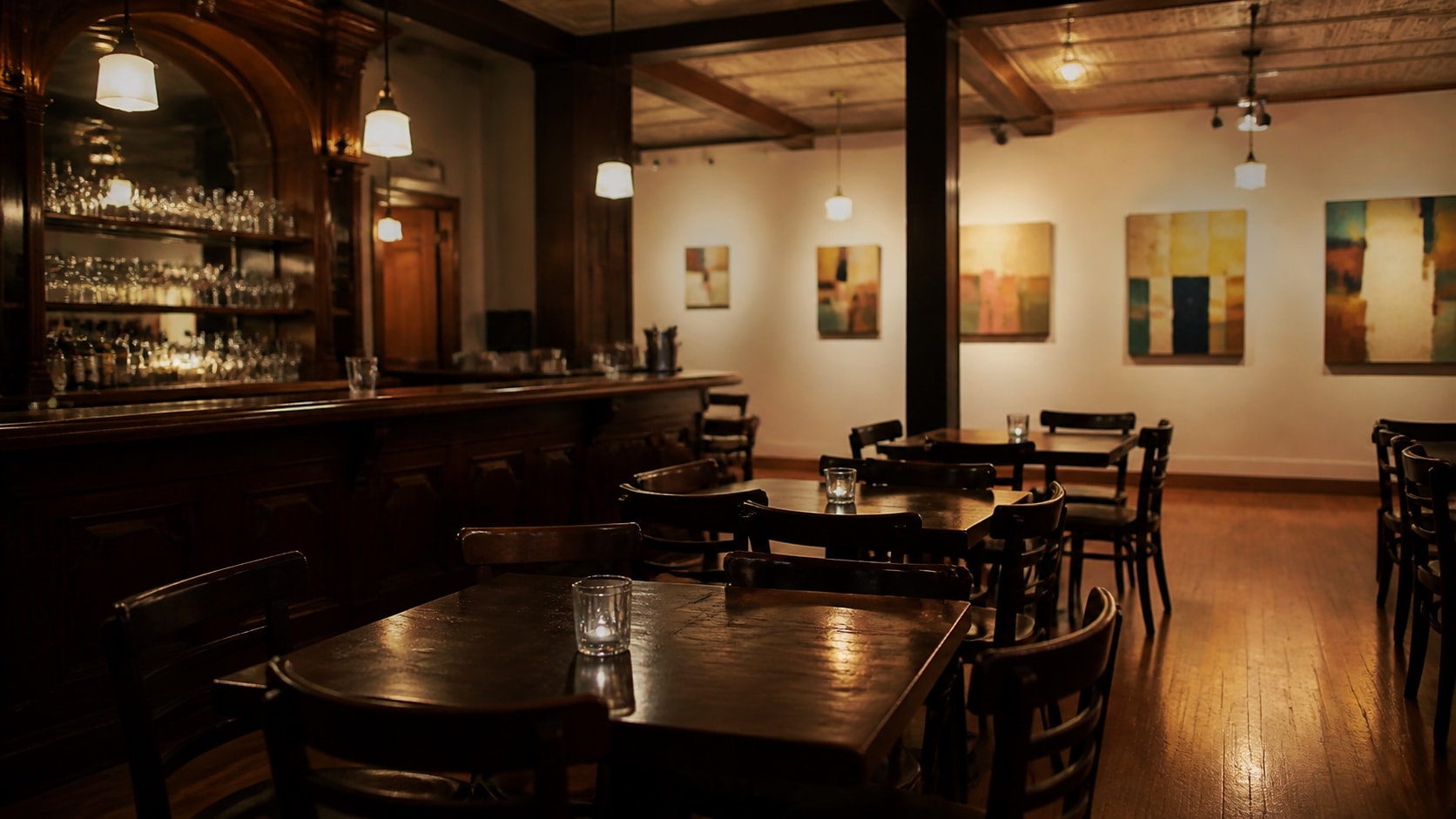
From Browsing to Staying
The documented shop already encouraged lingering through a connected gallery and an eclectic assortment. Hospitality extended that basic rhythm: arrive, look, talk, and spend time in a shared setting. Food and drink could turn a retail visit into a social occasion, while events gave people a reason to return at a particular time rather than only when they needed an object.
The exact sequence of when every programme began or ended remains uncertain. The pub belonged to the later culture around the shop, and the shop’s separately hosted publication shows genuine editorial attention to kitchen subjects, pantry ingredients, and wine.
Hospitality in a Gallery-Led Space
A gathering space connected with art and retail changes how each activity feels. Conversation can make a gallery less formal, while artwork and material detail can give hospitality a stronger sense of place. The success of such a mix depends on practical boundaries: food must be handled safely, fragile objects need protection, pathways must remain open, and alcohol service carries responsibilities that do not disappear in an informal atmosphere.
For current food-safety principles, readers should use the federal safe food-handling library. For alcohol-related risk, the federal health overview provides evidence-based information. These sources offer general education; they do not document or evaluate the former pub.
What Events Add to a Place
Events create shared time. An exhibition opening, tasting, talk, meal, or performance can connect people who might otherwise pass through independently. They also leave a different kind of historical trace from objects: memories, notices, photographs, and short reports rather than a durable inventory. No complete event calendar is documented, and no titles or appearances are attributed to real people or organisations.
That restraint protects the accuracy of third-party histories. Saying that a named artist, business, or institution participated would create a claim about them, not only about the Paula Brown Shop. Without direct evidence, the appropriate record is the general one: later event programming formed part of the shop’s community-facing identity.
Responsible Gathering Is Designed
Warm hospitality depends on visible practical care. Clear paths, accessible seating choices, water availability, readable information, appropriate noise levels, and a way to participate without drinking all broaden a gathering. Staff training and emergency procedures also matter, though no claims can be made here about historical policies at the former venue.
A place can feel spontaneous while still being carefully organized. That balance mirrors the shop’s wider character: colorful variety within a restrained architectural setting. Historic interiors explores the building qualities that supported that atmosphere, and wine notes offers a non-commercial framework for reading the shop’s documented wine subject.
Closure and Memory
The shop’s 2019 closure and the later replacement of the premises establish that this is not an active venue record. The pub appears to have remained part of the location’s story for a time, but current evidence also marks it closed. This page describes the shop’s tradition of gathering and is not an invitation to an event.
Remembered honestly, the pub represents an expansion of the shop-and-gallery idea into hospitality. It belongs alongside craft, tabletop, kitchen, wine, and events as one strand of a distinctive independent place—not as a service that continues today.