1999: A Shop-and-Gallery Idea
The original concept paired specialty retail with an art gallery. That pairing gave the business a wider purpose than a conventional gift store: practical objects, decorative pieces, craft, and art could be considered together. The shop’s broader identity centered on looking and discovery; no complete opening inventory or exhibition calendar is documented.
A shop of this kind relied on selection as its point of view. Historical descriptions identify gifts and home accessories, stationery, toys, American craft, bed and bath linens, table linens, flatware, crystal, china, jewelry, housewares, seasonal goods, children’s clothing, and a bridal registry. These categories are discussed as past subjects, not as current merchandise. The tabletop and linens essay explains several of the enduring home traditions behind that assortment.
2005: A Historic Downtown Setting
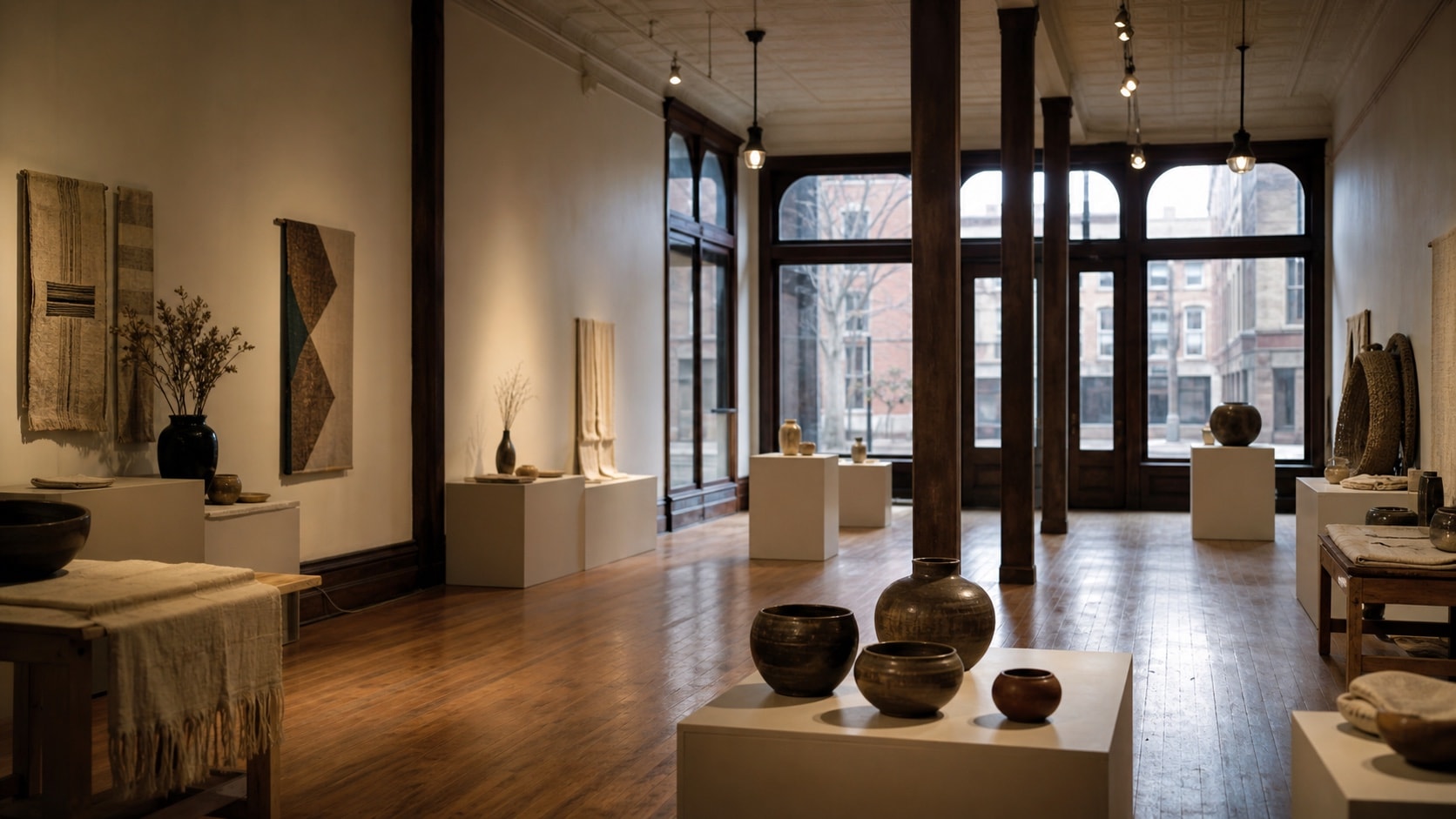
The 2005 move placed the shop and gallery in a renovated nineteenth-century structure. A contemporary feature described high ceilings and restored original hardwood floors, with the gallery directly connected to the shop. It also reported a first-floor showroom approaching 7,000 square feet. The scale created room for contrasting displays and made movement through the shop part of the visit.
Architectural history is more than a list of dates. Materials, proportions, window light, and circulation all influence how objects are perceived. The federal rehabilitation standards provide useful general context for understanding how historic character can be retained while a building takes on a new use. They are not cited as evidence about this particular renovation; they simply explain the preservation principles relevant to buildings of that age. The historic interiors page takes the spatial story further.
An Assortment That Encouraged Return Visits
Historical coverage presented the gallery as a major reason to return and as an entertainment element within the retail experience. Changing art and craft naturally create a different rhythm from permanent shelves. They invite a slower look, reward repeat visits, and give familiar home goods a new visual context. The store’s variety similarly encouraged cross-category browsing: a visitor could move from a place setting to jewelry, from linens to seasonal objects, or from gallery work to a practical kitchen piece.
Later evidence broadens the story to pantry goods, recipes, wine education, travel notes, a pub, and event programming. Exact dates and some operational details remain uncertain. Kitchen and pantry notes and the gathering culture essay describe the documented themes without recreating menus or calendars.
2019: Closure and Historical Status
A July 2019 local-news report announced closure and retirement after twenty years. A year-end local retrospective included the shop among businesses that had closed, and subsequent reporting described the location as the former or old Paula Brown Shop. Current directory traces cannot outweigh that dated closure record. These pages contain no suggestion that the business is trading, taking orders, hosting events, or maintaining a registry.
The shop’s historical value lies in the combination that sources consistently describe: retail, gallery, material culture, and hospitality within a characterful urban interior. That is enough to support a thoughtful record. For a concise account of the evidence and its limits, continue to the source notes.